
Plunging Into the Second Draft
Isaac's Novel-Writing Journal

This post is part of a series. Click here for Part 1.
Oak Bluffs, Mass., July 20, 2025.
I write these words from a beach on the beautiful island of Martha's Vineyard, where I am indulging, rather than the regular beach reading, in a little bit of beach writing—taking time to handwrite these thoughts onto my e-reader between long, quiet spells of gazing at the waves. I am covered in beach towel, linen shirt, and two separate layers (three on my ears) of sunscreen, so as not to repeat the Lobster Saga of last year, and I am thinking about the Modern Library Writer's Workshop by Stephen Koch, which I read on the car ride over.
Most of my vacation will be spent with Albion W. Tourgée, the subject of my next dissertation chapter, but for now I am being bad and thinking about my novel—a scandalous little treat that I work on when, really, I should be working on the dissertation. (This blog, as it turns out, is my other scandalous little treat, demonstrating, I suppose, how bereft of real scandal, and perhaps real treats, my life is at the moment.)
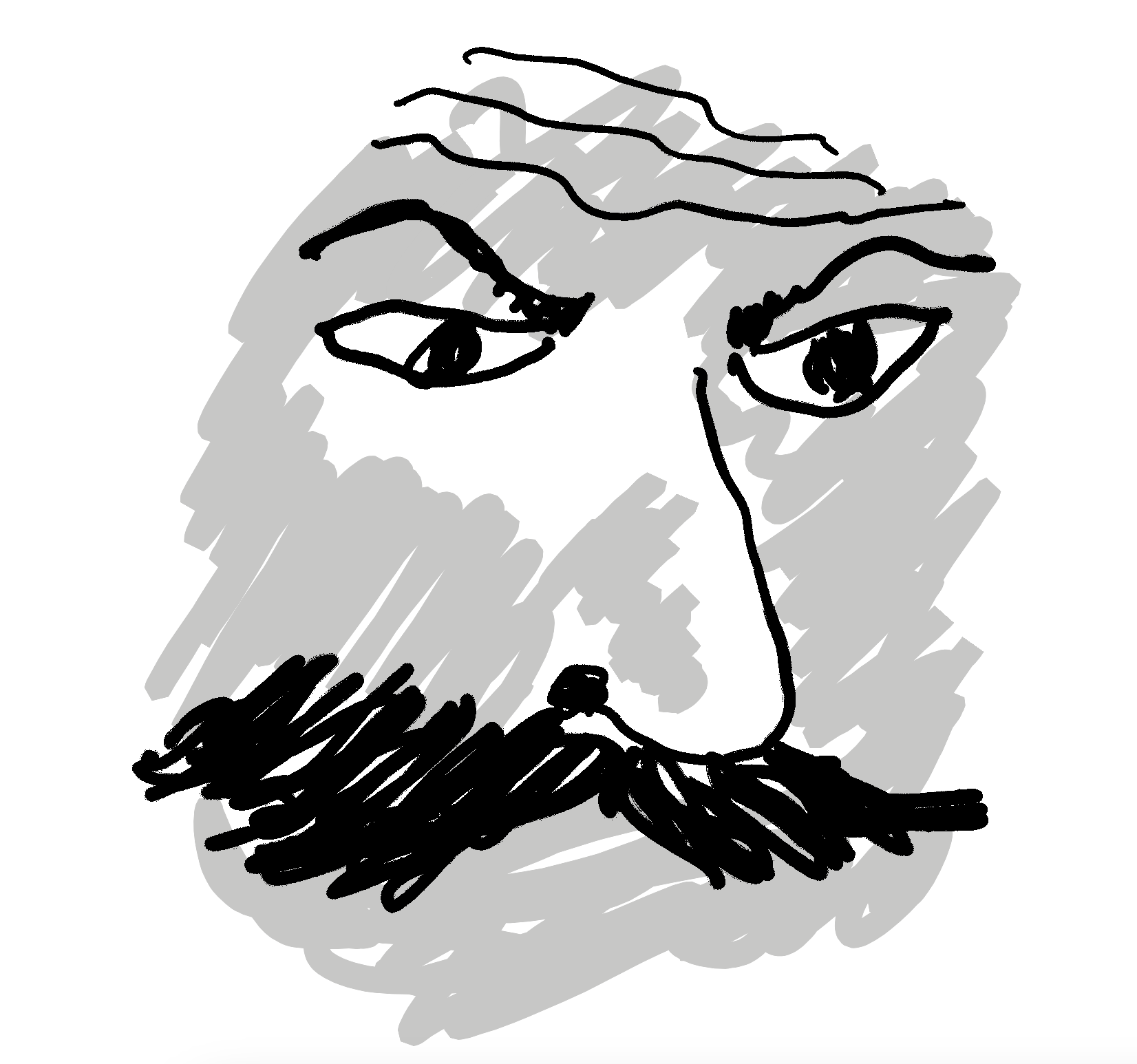
Well, so anyhow, I've been reading this book by Koch and reflecting that I have never read or even heard of any of his novels. My cynical mind asks whether any of his novels sold half so well as his guide on how to write novels. Still, all of the advice in the book strikes me as sensible and correct, and so I plan on following much of it. (This is one shortcoming of advice, I suppose, which is that I only take advice if I agree with it. Surely the point of advice is to encourage me to do things that I would not do without having read the advice, but if I read advice that instructs me to do something I would not otherwise do, I would not follow the advice, since it would probably strike me as wrong! Still, I plan on reading more writing advice. I picked up Bird by Bird at a bookstore and will probably work my way through much of Peter Shull’s useful curriculum.)
The plan is to write a second draft, one which will address some of the bigger structural, story, and plot problems with the manuscript. I still haven't read the manuscript's first draft, from a mixture of dread (I hope that it will not be as dreadful as I think it will be, but I have a feeling that it will, and not reading the draft allows me to continue to imagine that perhaps it isn't quite so bad) and bog-standard business (I just taught a demanding writing course; I am preparing to teach a course in the novel; I am trying to finish this damned chapter on Tourgée).
Koch says not to let anyone else read the first draft.He says to read it all, in just one sitting if possible, and not to try and fix it as you go, but simply to note, as dispassionately as possible, where the draft works and where it doesn't. Then, the idea is to rewrite the whole thing, bottom to top, fixing all of the structural problems, plot holes, and so on, saving most issues with style and voice for later drafts. So the next step will be to actually sit down and read the draft, and hope that, after doing so, I do not want to light either the draft or myself on fire.
This concludes this journal entry. After the section break, I will be a different man. I will be changed. I will have read the dreadful draft.
Buffalo, NY, August 4, 2025.
You’ll be relieved, reader, to hear that I am only mildly sunburned. I am now seated in a coffee-shop in Buffalo, having just finished reading my manuscript. At the end of the last paragraph, scrawled in blue ballpoint pen, is a large word: “MEH.”
That about sums it up. I am not in despair, but I have a long road ahead of me. The thing is just really, really unfinished. Which is stupid to say, I know.
To be honest, the first hundred pages or so are pretty good. Not great, not perfect, and surely in need of some plot-hole repair—but not bad. These first chapters are driven less by plot and more by voice and language, and I think (hope!) that the enjoyable language is enough to pull the reader along, joke by joke, while I set up the premise and wander through a few episodic variations on the premise.

After the first hundred pages, the book gets much less episodic and plottier, and the bottom sort of falls out of it, because the pleasure of this book is mostly in the language, not in the plot. (I try, and, I think, fail at initiating and increasing suspense, a difficult task that I don’t quite know how to do.) As I started trying to land the plane of the first draft, my primary concern was how to tie everything up in a way that at least marginally made sense—my concern with voice evaporated, and I started writing more quickly and trying to make things fit together logically, imagining a CinemaSins-inspired reader eagerly trying to show why a character wouldn’t have sufficient motivation to do a certain thing, or whatever. For me voicey writing (particularly when the voice of the narrator is significantly different than my own voice, as in this case) can only really be produced slowly and quite deliberately, and as I read through the draft, I can hear the prose getting slapdash and impatiently composed as the book rushes (and rush it does) to a conclusion.
And so, weirdly, I find myself giving myself the same advice that we all dread hearing from a workshop participant: “I want more.” The book’s first half goes along at a pleasantly leisurely pace, but at the point that I started to worry about plot, the pace changes and the whole thing goes belly-up. It doesn’t offer the same kind of leisurely pleasure to the reader.
__
The book is a high-concept science-fiction thing set in the present day, and there is no way, I am convinced, to make the inciting incident of the book at all plausible to the reasonable reader. The clash between the realistic setting and the science-fiction inciting incident are so great that I am afraid they will frustrate the reader. And so one question is: how airtight do I need to make the book? How consistent does the internal logic of the science fiction of the book—the worldbuilding, I suppose—really need to be? Or can I simply tell the reader, “this is my premise. Get on board or put the book down”? For now, my goal will be to make the book as internally logical and plausible as possible without adding reading time to the book. I don’t want to waste the reader’s time explaining why, if we are to assume that time travel did exist, that this whole thing would make sense, or whether a time-traveler to the present day would be able to get a Social Security number or would need a green card or whatever—I want to establish the premise in a way that respects the reader’s intelligence, let the reader accept it or reject it, and then move on to the fun part.
__
But then the plot itself is also a mess. Around the middle of the book, the plot has the dreaded “and then” feeling, whereby none of the events really seem to have been caused by one another, but happen in blurry sequence. So, in the second draft, I need to clarify the causal relationships between all of the major scenes (and get rid of scenes that no causal relation to the overall story) without disrupting the episodic structure of the book and without making it a lean, overefficient screenplay.
And then, of course, in a voicey book, the biggest errors—the places where I fall most visibly on my face—are problems with the tone, which need to be revised in a more painstaking way, phrase by phrase and sentence by sentence. This is the part of writing that’s probably the most fun for me. It’s also a complete timesink, and I would very much like to get this book done as quickly as possible, for personal reasons which I may or may not decide to disclose.
__
So, revision plan: first, I want to make an outline of the book as it actually exists. Second, a revised outline of the book as it ought to be, with a series of causally-related scenes that make sense and a well-structured and evenly distributed subplot that does not yet exist. Third, a scene-by-scene rewrite of the book where I keep the bits that seem to work and try to add more voice, more voice, and more voice. The Koch book tells me that every project goes through short drafts and long drafts—usually alternating—and that three drafts, from beginning to end, is a normal number for a novel project. Well, I’m now starting to realize that my first draft was a fast draft, that my second draft is likely to be a long draft, and that my third draft, hopefully, will be a fast draft, although really it’s quite irresponsible to look forward to draft three when I haven’t really started on draft two yet.
OK, head down, and now I go back to writing.
I enjoyed everything here: the writing, the content and the illustrations, most of all the loving portrait of your first draft.
I have a question: while "saving most issues with style and voice for later drafts" sounds reasonable and even necessary, does not the half-baked style, a naked and chatty wannabe, jump out all the time, distracting and preventing you from focusing on the plot? I still wonder how to separate those working phases. How does one manage to trust the process and not capitulate?
Sounds like you are juggling a lot, several times over. Regarding the novel, sounds like you ventured into some seemingly intractable but useful semi-chaos. Three drafts of a novel is useful if the first draft has good structure, because then you can follow that with two passes of flesh-out and modify, expansion and discourse.
I would suggest setting the voice opening aside, which sounds like it will be its own creature, to focus where you can do the most work: on the plot-driven part. To first tighten it by clarifying/creating a causal ever-intensifying structure, it would be good to rewrite it in script form (using free DramaQueen software or the like), then in the next draft adapt it back to novel form, which will necessarily expand it and restore some details of description, reflection, takeaways and so on, more dialogue, some more actions, then the final draft will be more of that detailing, expanding, and finishing.
How you connect it to the voice driven part you'll need to determine; you seem to have a feel for it already.
You could write the script initially in classic 5 act TV episode form for ultimate initial concision and structural clarity. Or create the script as 7 acts, or a double episode, or screenplay length, etc, if you need more structural/story length. By going the script route you should be able to see the plot/structure with far greater clarity, because so many details other than character, basic dialogue, and main action are stripped out. Thus, you can ensure that the plot is 1) causal, 2) intensifying, and 3) appealing to your main characters' deepest fears and desires, or turning powerfully on key questions and paradoxes - which seem to be the most potent story engines (in scripts), aka plot devices (in novels) that are known.
What's the ultimate goal of the character(s), and what's the ultimate goal of the author? These overarching forces typically drive the whole thing. The structure and discourse embody and tell this tale.
It's good to riff to get story going (for imaginative power) (journal draft), then shift to the efficient construction of script form (for structural power) (first draft), then shift back to novelization for all its great expansive effects (for discursive power) (second & final drafts). Some novels can't abide this type of construction, and some can shortcut it, but many would benefit by it.
You may be working with a hybrid voice plus plot creature - or maybe there's more structure/plot to be found in the voicey section than you might think, and vice versa. Or not! It all comes back to creating the story with great fidelity to the character's goals and to your own purpose as author.