
Beyond Identification
reading for difference

When we talk about the benefits of reading literature, we talk too much about identification, and not enough about the pleasures of encountering difference.
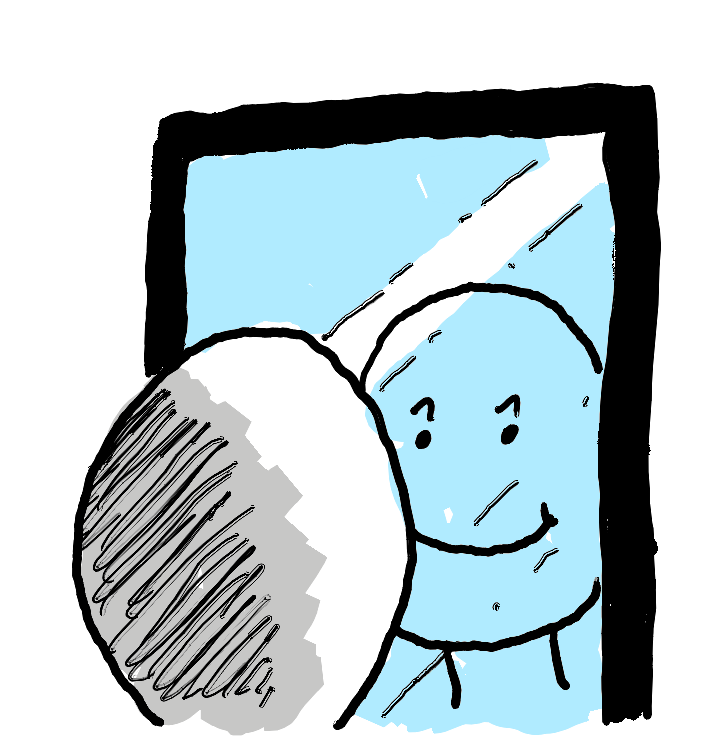
When I say “identification,” I mean relating to a text—seeing oneself (or a part of oneself) in it. To identify with a character is to feel some sense of sameness with them. When a character in a novel feels just like I would feel, or goes through a situation that’s similar to a situation that I’ve gone through, I identify with them. When a narrator perfectly describes a sensation or feeling that I have never been able to name, I identify with their description. When a piece of literary art perfectly expresses my own despair, or joy, or righteous anger, I identify with it—I feel like the artist has expressed something that is congruent, in some sense, to what I feel inside.
We can identify with nonfiction, too, not just fiction: if an argument names or describes something that we immediately acknowledge as right, as part of our experience of the world, we recognize our own experience in the text—we identify with it.
Don’t get me wrong—I’m not saying that it’s bad or wrong to identify with a text. It is, in fact, one of the chief pleasures of reading. For many people, seeing oneself in the text is an antidote to loneliness: when we suffer, we are all tempted to think that we suffer alone. But if we identify with the story of another person’s struggle, we don’t stop suffering, but we do at least suffer together. That almost makes it OK. Pete Holmes has a great joke in his special Dirty Clean: the worst part about hell wouldn’t be the torture—it would be the fact that the condemned don’t get breaks to get together and talk about the torture. If everyone could get together and complain and understand that others are going through something similar—“that would actually be heaven. Suffering, then talking about it, suffering, then talking about it…”
A lot of readers also report that they find a great deal of solace and encouragement when they read books by authors that are like them across some category of identity. For example, Roxane Gay writes about her experience reading Toni Morrison’s novels: “When I read each of Ms. Morrison’s novels for the first time, I saw far more than a reflection of what it means to live in a black woman’s body. I saw majesty and infinite possibility…she broadened the scope of what I thought was possible for myself as a writer and a woman. I can never repay that gift.” When writers talk about why “representation matters,” they are almost always talking about the value of identifying, in some way, with a text, and about how these acts of identification can be meaningful, inspirational, and important. This is a real gift; I don’t want to underestimate its value.
So I’m not saying that we should abandon identification, or that we should consider it an unsophisticated or irrelevant form of reading. As Faye Halpern and Rita Felski, among others, have argued, reading for identification has been rather unfairly abused among literature professors, who tend to consider it as the opposite of “critical reading” and who see it as naïve, sentimental, and so on. But I’m not intervening in that debate here; I’m trying to think about how non-professionalized audiences talk about identification. Because outside of the university, identification sometimes seems like the primary pleasure of reading discussed! It’s not like anyone is saying that we should only read for identification, but we so seldom talk about other kinds of pleasure that it seems like the most dominant way that people argue for the value of literature.
This may seem like an overstatement, and perhaps I’m being a little polemical here. But when we argue that literature is valuable because it helps develop empathy, we’re making an argument for reading for identification. When we argue that we should read literature to discover or describe a universal human nature, we are making an argument for reading for identification (after all, what is a universal human nature but something with which everyone can identify?). When we emphasize the pleasure of characterizations that just seem so true-to-life, so instinctually accurate, we emphasize the pleasures of reading for identification. When we criticize books for alienating the reader, we are often criticizing books for failing to provide the pleasures of identification. If a character acts in a way that we wouldn’t in that situation, we often criticize the character as unrealistic: because we did not identify with this character, they seem flawed, less real. And, perhaps most dangerously of all, if an author is part of a group (religious, political, etc.) that we disdain, we might assume that they have nothing to teach us, nothing to say that is worthy of our attention.
But as lovely, and as important, as identification can be, it should not be the only way to enjoy literature. If we only read for identification, we miss out on something that is also wonderful: the strangeness of other people, the ways in which they are just so different from us. Like, people are really different. They sometimes possess values that are not just subtly different from ours but utterly incommensurate with them! It is useful to know this, not merely as an abstract fact, but as something that we experience. The written word is a wonderful way to have that experience.

Like, Thoreau is a crank—he’s moralistic, badgering, cantankerous. He doesn’t seek to identify with his readers. In fact, in Walden, he says to his readers: “It is very evident what mean and sneaking lives many of you live,” going in and out of debt, grasping, striving, “lying, flattering, voting, contracting yourselves into a nutshell of civility…that you may persuade your neighbor to let you make his shoes,” and, famously, “the mass of men lead lives of quiet desperation.” (My God, can the man write a sentence. Go back and read those aloud, slowly and with relish. Just terrific.) He is pushing his reader away, emphasizing how different he is from them, trying to set up a gulf of difference across which he may fling stones at them. And he succeeds, which is why many people don’t like him very much! He offends some readers. He is too different, too contemptuous of his reader and their assumed values. He’s weird and discomfiting.
But confronting this essential difference between myself and Thoreau is where so much of the pleasure of Walden comes from. Because I would not really and truly investigate my own bourgeois desires—my desire to own a house, for example—unless I were confronted by an intelligent person who genuinely believes that they are faulty desires, that to get a mortgage will make me “mean and sneaking.” I don’t agree with Thoreau on these counts. That does not mean that there is no value to my reading him! Quite the contrary. In fact, because he makes me counter his arguments mentally, he impels me to re-evaluate my life. He makes me ask: “am I living a sneaking and mean life? Could this strange and abrasive man be right?” Yes, the experience is not the comforting pleasure of identification—it is a more vigorous, more engaged pleasure, one that brings me to awe at the variety of human experience and that forces me to ask and answer big questions about the good life.
Reading books that we do not identify with is also educational. The readers of the nineteenth century knew this—that’s why they spent so much time reading travel narratives and, later in the century, regionalist novels: to get a taste of a life they did not know. I just finished John W. De Forest’s European Acquaintance (1856), and the book focuses, as so many travel narratives, on cultural differences. Look at how weird these Europeans are, how differently they live than Americans! It’s true that this focus on difference can come across as dismissive or touristic or tokenizing. But it also demonstrates the basic intellectual virtue of curiosity: the reader who wants to read about the strange and new and unfamiliar is the reader who wants to learn more, to become acquainted with difference. If you only care about or are interested in characters who are like you… well, you’re leaving a lot of knowledge and pleasure on the table.
This seems very obvious and basic—I suppose it is—but readers of all stripes should consciously value difference, should think about it as one of the central and foundational things that make literature valuable. It is good to remember that you can read across religious, cultural, emotional, identity, and political chasms without losing your own commitments, without being damaged or corrupted or even bored. We are not blocked from enjoyment when something is strange or doesn’t make sense or is simply very alien to us. That is its own form of pleasure. And, importantly, it is a pleasure that opens the world up to us, that helps us understand the breadth of the human condition as something that reaches beyond our own limited experience. We get to encounter people who think differently from us—not for the purpose of building common ground, necessarily, or realizing that, deep down, we are all in fact the same, but for respecting and regarding as real and meaningful even those elements of the human condition that we cannot immediately relate to. If we consider things that we identify with as the only important, urgent, real, fundamental things about a piece of literature, we’re losing out on a whole dimension of enjoyment.
Reading can take you anywhere, as the old classroom posters say. Why not go somewhere you’ve never been before?
I love this! And I love that you turned to Thoreau as emblematic of reading for difference. It actually make me chuckle a bit to myself because I did my undergraduate thesis on Thoreau and was admitted to graduate school as a 19th-century Americanist — but everyone seemed to sort of cock their heads at me when I told them in all seriousness that I, an Iranian American woman, wanted to study Thoreau. (I’ve since completely shifted my dissertation project and fields, but that’s another story.) My point: I loved — and still do — Thoreau precisely for those differences. Not just the simple and obvious differences of identity, but also the differences in how he lived, thought, wrote, read. It amazed me, particularly when I was younger, and I was obsessed with it. I love being taken out of myself when I read. Just as much as I love seeing myself represented on the page! Reading entails both of these experiences, but I imagine it somewhat unfulfilling to only read for the latter.
The is great! I must admit that I get rather disappointed when someone tells me that they didn't like a particular book because they couldn't relate to the characters. There really is so much more to literature than putting yourself in the protagonist's shoes. There is the pleasure of differences, as you've put so eloquently here, but there is also enjoyment in appreciating the aesthetics of a text. For example, you can appreciate the prose in Nabokov's "Despair" while not relating at all to the morally corrupt protagonist.